
AUTUMN SALE -20% OFF!
You missed out!
DIAGNOSTIC-DEVELOPMENT COURSE
For physiotherapists, midwives, and pediatricians!
- What tests to perform during consultations?
- What exercises should be included in your therapeutic plans?
- Which methods of carrying and exercises to demonstrate to parents during visits?
WHAT DO YOU GET?

Proven and organized knowledge from the Child Master, where physiotherapists from all over Poland come to learn

A development support program tested on thousands of infants

Knowledge about how a healthy Toddler develops in the first and subsequent quarters

Confidence and peace of mind that everything you do with the Toddler is safe and supports their development

Answers to over 60 questions that parents asked us

Our support in a group for participants

10 hours of video materials

14 modules divided into 51 lessons

Knowledge and skills that you will apply in your everyday work in the office
Comprehensive knowledge about infant development in the first year of life.
- Accurate diagnosis is crucial for evaluating your work by parents,
- Effective therapy will bring you positive reviews from parents, and consequently, more little patients.
You will learn:
- You will learn examinations and tests that you always perform during consultations with infants,
- You will learn methods to inhibit asymmetry and normalize muscle tension levels,
- You will become familiar with exercises that will be the main elements of your instructions and therapeutic plans.
You will gain organized knowledge backed by 33 years of experience with thousands of infants!
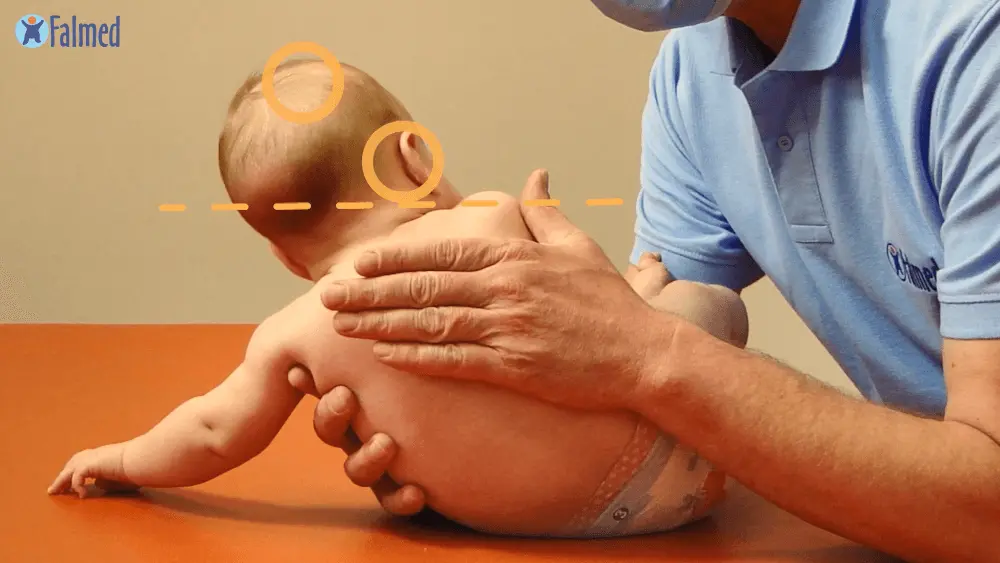
Examining head control in the supine position and conducting a lateral control test is a fundamental diagnostic activity that I perform with infants in the first quarter.
In this course, I will show you, among other things, how to conduct such an examination, what constitutes the baby's correct behavior, and what conclusions we can draw from the test.
Conducting this and other examinations, which you will also find in the course, is crucial for making an accurate diagnosis.
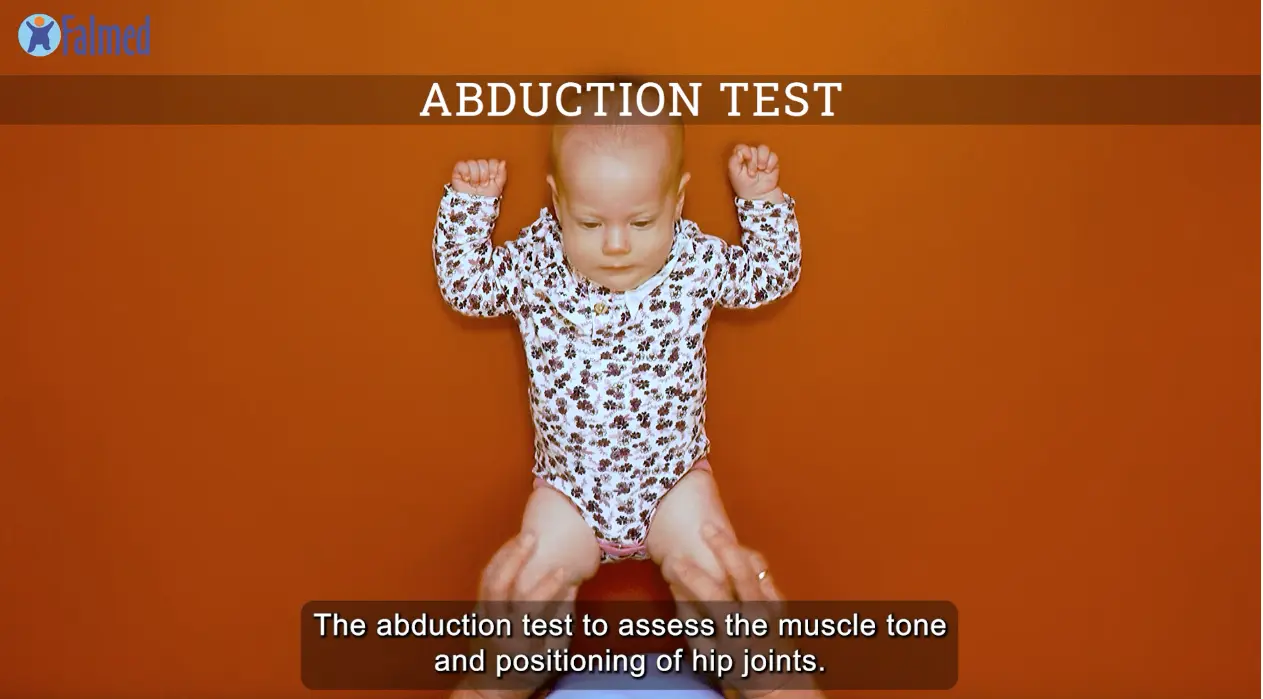
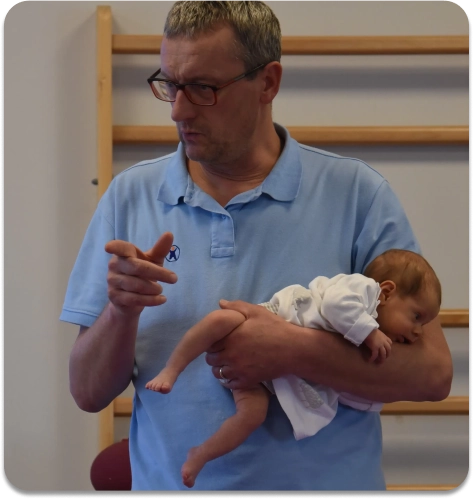
Another of the several examinations that I routinely perform on infants in the first six months is the lower limb abduction test, which you can see in the photo below.
This examination allows assessing the level of muscle tension in the pelvis and lower limbs in the first quarter of life.
I check, among other things, the level of symmetry between the limbs, muscle resistance, and range of motion.
In this examination, I also assess the so-called triple flexion and the stretch reflex control test of flexors. I also perform the plantar control test.
All these activities allow me to preliminarily assess the level of muscle tension and control of movement in the lower limbs.
By conducting a full set of examinations, which you will learn about in the course, I can make an accurate diagnosis regarding the occurrence of any developmental deficits. However, going outside requires purchasing footwear.
Examinations and tests conducted during consultations are just one module!
See what else I have prepared for you.
The First Six Months
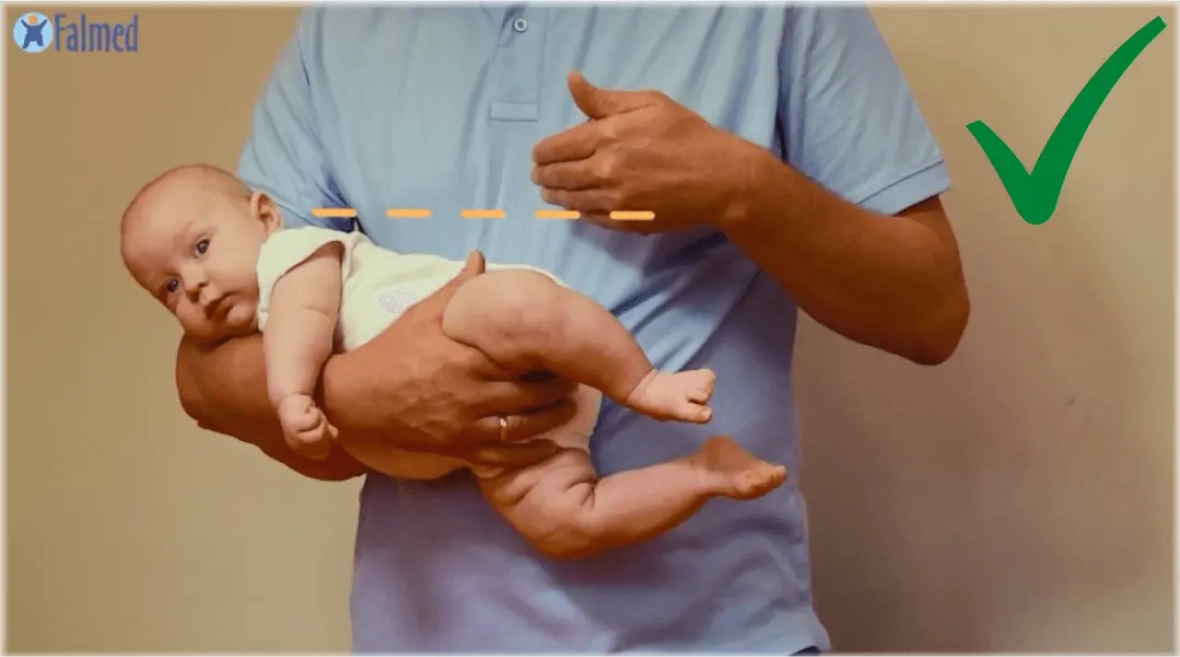
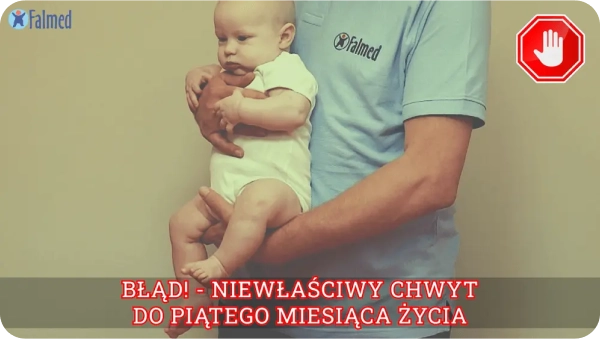
It is evident to every specialist that infants in the first six months should not be carried upright. So, what methods should be proposed to parents during consultations?
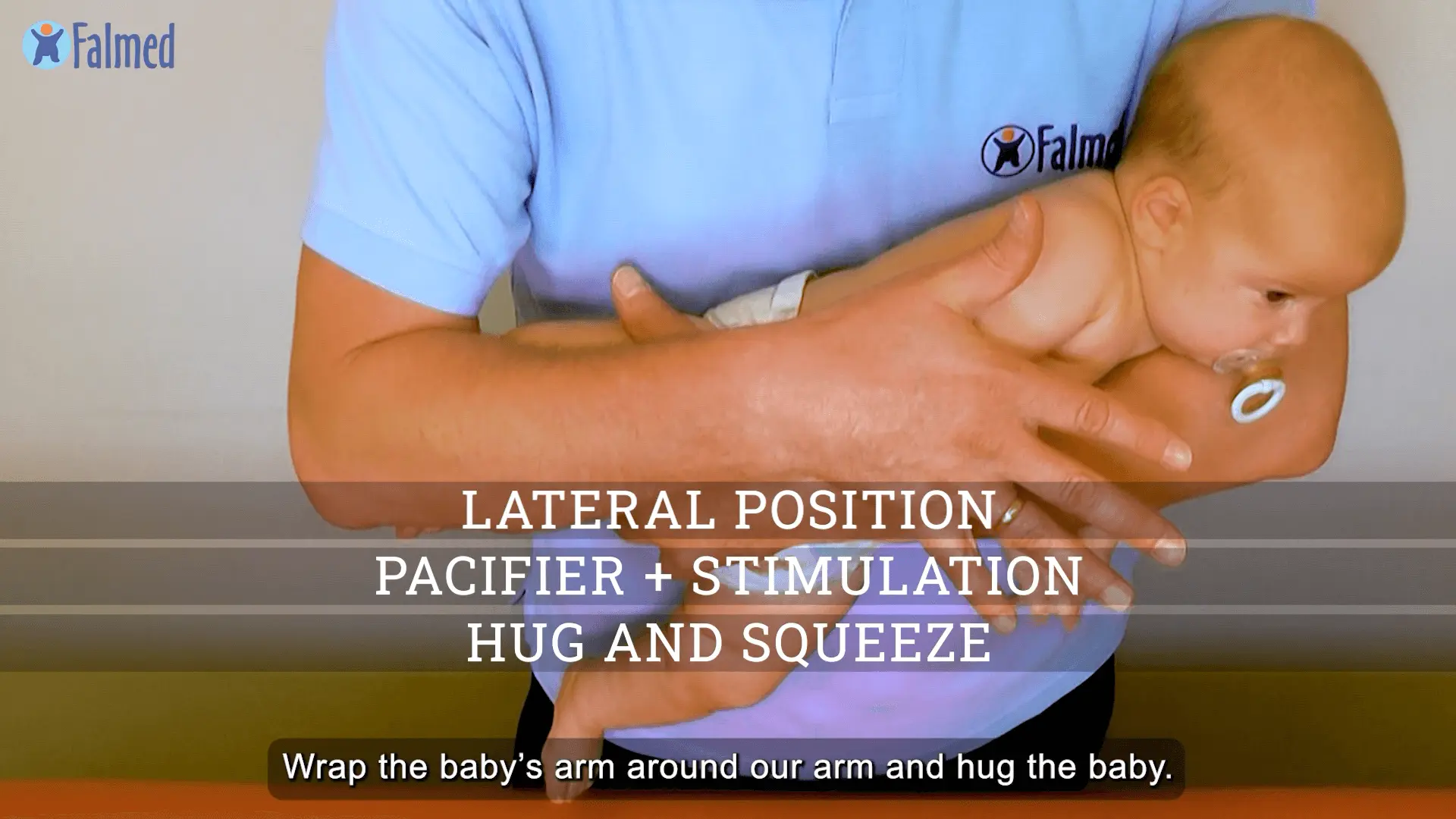
One of our favorites is the "tummy time" position, also known as the side or branch position. In this position, the baby is symmetrical, and their little arms can be aligned along the body's long axis.
This position also supports gastric issues and helps eliminate infantile colic! In this position, the baby can freely observe the world, and through gentle pressure against our chest, we provide closeness and contact.
Moreover, carrying in this position has a calming effect on the baby and makes them less fussy!
Second Quarter
In the second quarter, the baby's activity on the tummy should increase. However, infants may not always be willing to spend time in this position.
In this course, you will find many games and exercises that will help you encourage the baby to be on their tummy.
You will also learn how to normalize muscle tension levels, both in children with increased muscle tone and those with low muscle tone.
Explore the entire module dedicated to exercises on the ball, which strengthen the torso and promote high support action. These exercises focus on symmetry and alleviate developmental deficits.
The exercises you will learn in the course have helped thousands of infants rehabilitated by me and my team.
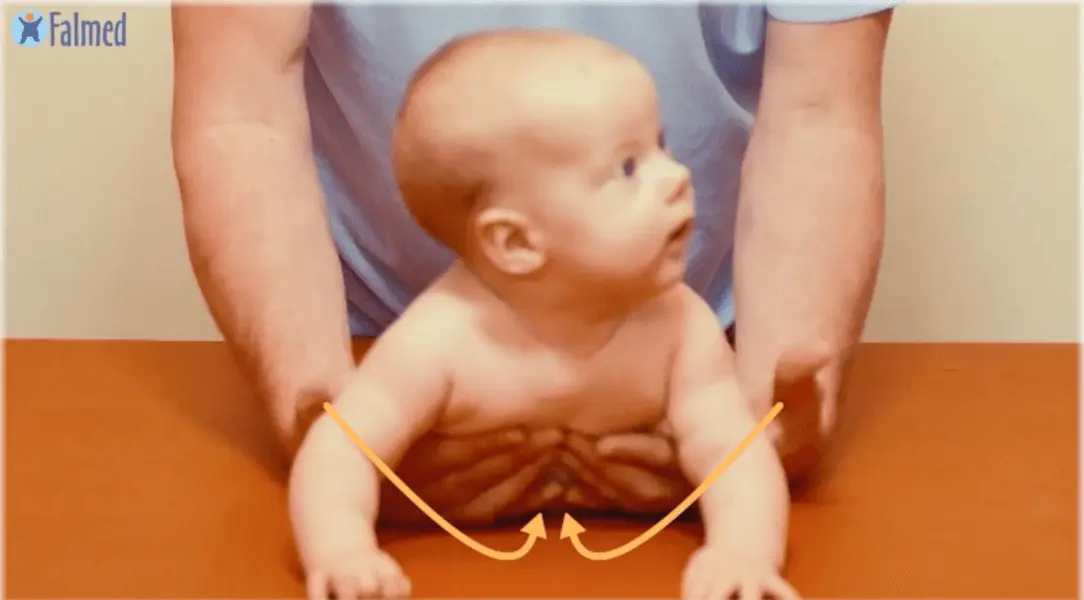
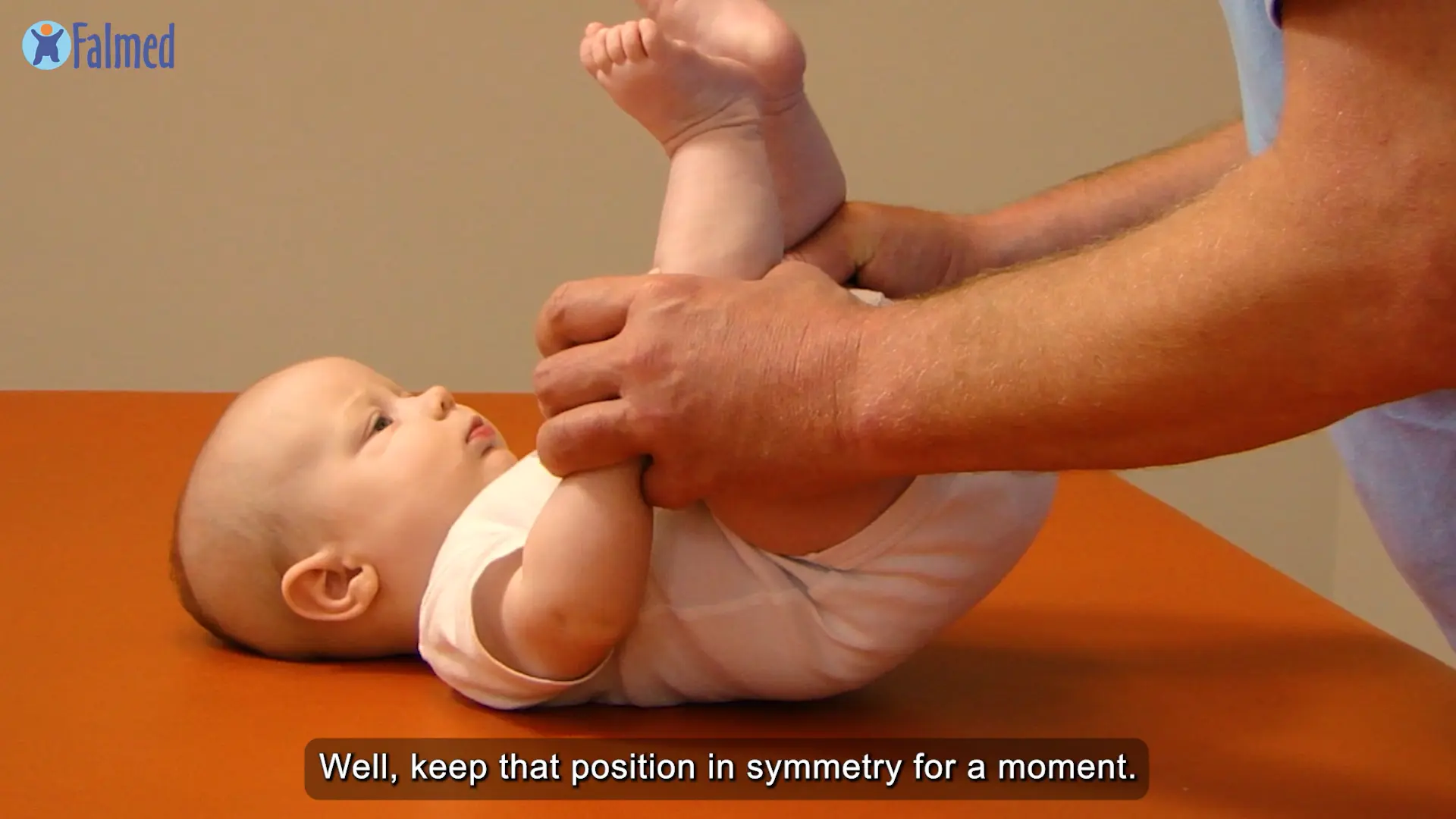
High Bottom Play is an exercise where we activate the whole baby's body. Both the hips, legs, and arms are engaged in this activity.
In High Bottom Play, we encourage the baby to make contact between their hands and feet, allowing them to explore their own body through play.
It is crucial to position the hands along the body's long axis to maintain symmetry.
High Tush introduces more flexion patterns, which works well for all babies who tend to stiffen and arch. Additionally, this play helps in relieving trapped gas.
An essential element that positively influences the harmonious development of the baby and supports the therapeutic process is eye contact.
In the course, you will also find a comprehensive set of exercises stimulating sitting, crawling, kneeling, rotations, standing up, and walking – covering all the developmental milestones from 7 to 15 months!
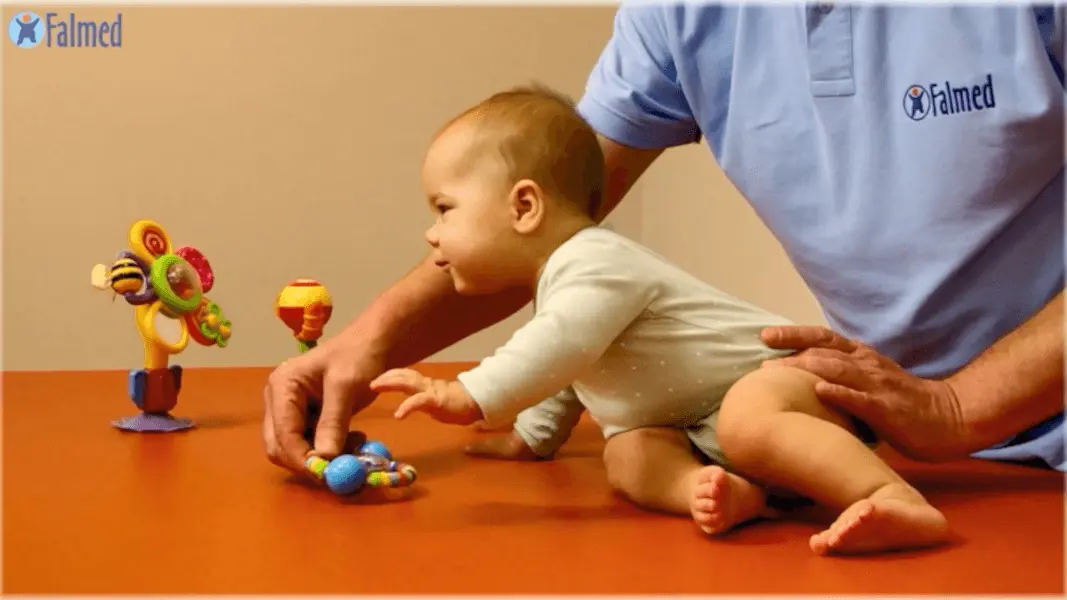
Sitting is a crucial skill in the baby's development. According to developmental norms, a baby who has turned 6 months old should be able to maintain a sitting position independently! By the end of the 9th month, we should observe the ability to sit up on their own.
In this course, you will learn how to initiate sitting with the baby, transition from crawling to sitting sideways, and strengthen the torso in ball activities while sitting.
Our suggestions are safe and fully adapted to the baby's age! They are based on 31 years of clinical experience at Falmed!
Our course gives you confidence that your therapy will be safe, trustworthy, and effective.
Another crucial motor skill that it's valuable for the baby to master between 7 and 9 months is crawling.
However, it happens that babies crawl on their belly, flap their arms, or use only one side of their body.
In this course, you will learn how to initiate crawling! How to strengthen the arms, torso, and hips, so the baby can easily achieve this developmental milestone!
Crawling provides independent locomotion, allowing the baby to explore the world and the environment, which significantly stimulates their proper development!
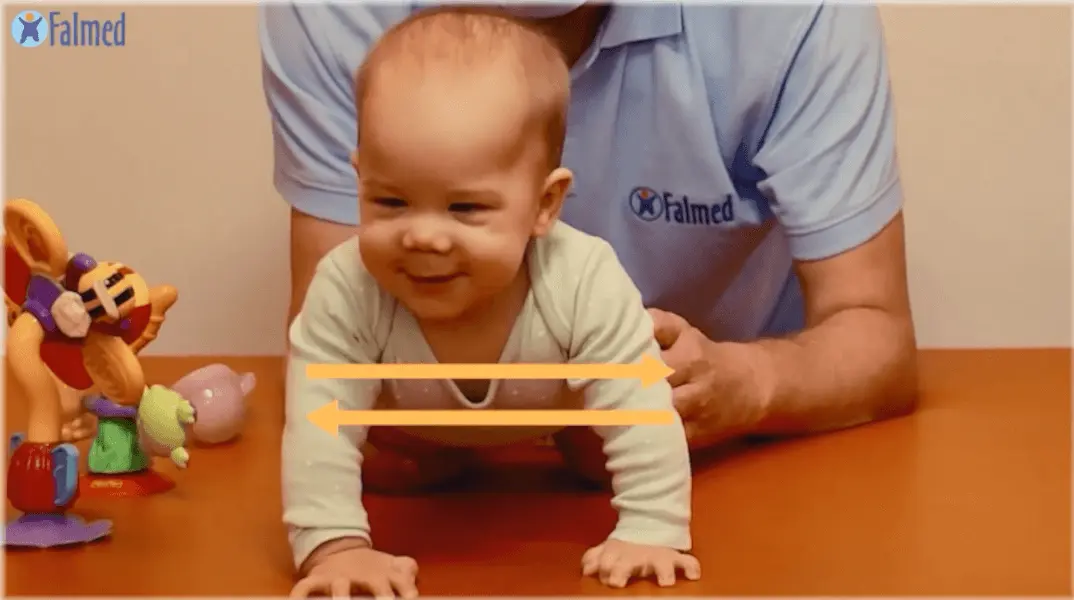
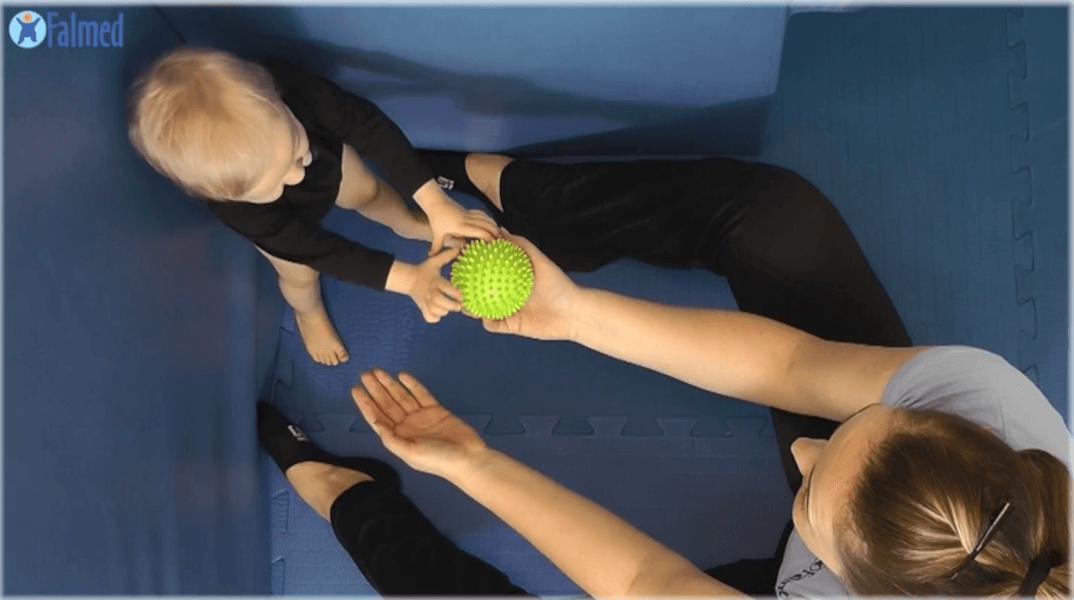
The oldest babies may encounter difficulties with standing up and walking. According to our clinical experience, these skills should be achieved by the baby by the age of 15 months.
In the course, you will learn various techniques that will improve standing, strengthen the legs and torso, and stimulate the baby to walk.
You will discover how to achieve this effect by enhancing balance and torso control on different surfaces, including the use of sensory tools. We will explore methods for vestibular and proprioceptive stimulation.
You will also learn about the first shoes for the baby, expanding your knowledge for consultations with the oldest infants.
SEE SAMPLE VIDEO CLIPS FROM THE COURSE
Video lessons where you will learn how to examine and diagnose infants, suggest exercises to parents, and perform therapy with infants—this is not all you will find in our course!
I know what you're thinking right now... Who on earth is this person and why should I trust him? Maybe he's not a specialist at all, just pretending to be one and trying to deceive me?
Calm down. Take a deep breath and look on my credentials!
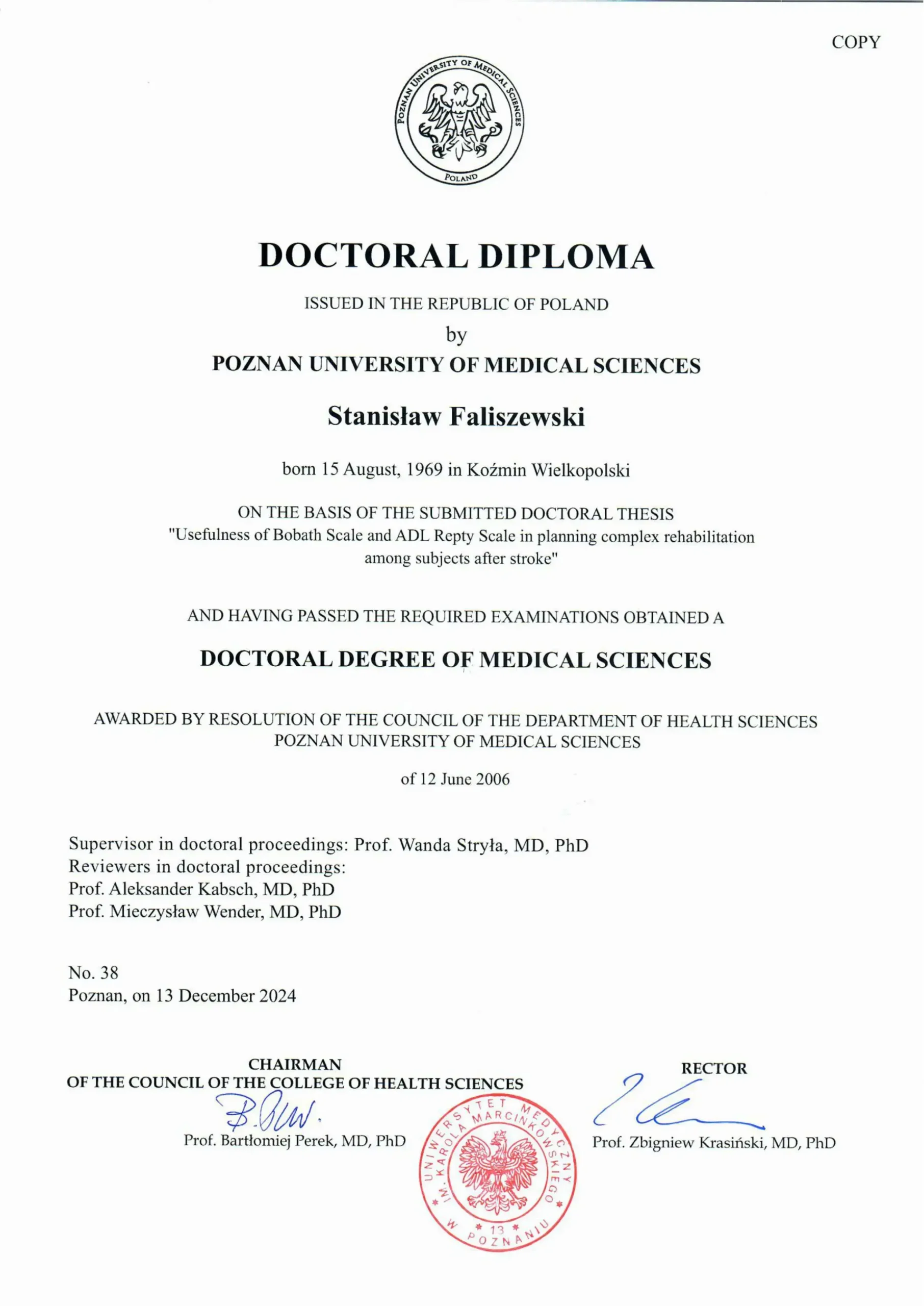
My name is Stanisław Faliszewski, and I hold a Master's degree in Physiotherapy and a PhD in Medical Sciences. I defended my doctoral thesis in 2006 at the Medical University of Poznań.
Since 1997, for the next 25 years, I taught at the Poznań Academy of Physical Education in the Physiotherapy program. I taught specialized courses such as Pediatrics and Neurology, fields to which I have devoted my professional life. This is my great passion.
But I am not a doctor sitting behind a desk simply teaching students. First and foremost, I am a clinical practitioner who has been practicing for 33 years. Every week, I consult new patients, enriching my skills and experience.
The course I want to present to you is the result of my many years of experience with thousands of infants.
Video opinions
Answer for these questions...
WHAT WILL HAPPEN IF I DON'T ACQUIRE THIS KNOWLEDGE
I consult with several dozen infants each month.
Parents often come to my office with these issues.
Based on years of experience, I have prepared an organized program for you. This program will help develop your knowledge and skills in pediatric physiotherapy, enhancing your business!
30-DAY MONEY BACK GUARANTEE!

I know what you're thinking! This guy is not from the UK and is probably trying to scam me!
Before we entered English-speaking markets, my courses sold in thousands in Poland. That's why I'm confident that everything I want to share with you there will be safe for you and your little one!
I propose a 30-day satisfaction guarantee. If the course doesn't meet your expectations, I'll refund 100% of your money! It's like a test drive for a car - if you're not satisfied, you don't buy it.
Seems like a fair deal, right?
Simply email us, and we will refund your money without any questions!
What will you find in the course?

51 video lessons
Where I explain everything step by step

Audiobooks
About normal and abnormal behavior of infant

Questions and answers
Plenty of answers to frequently asked questions during Q&A sessions with me
I will explain and show you why:
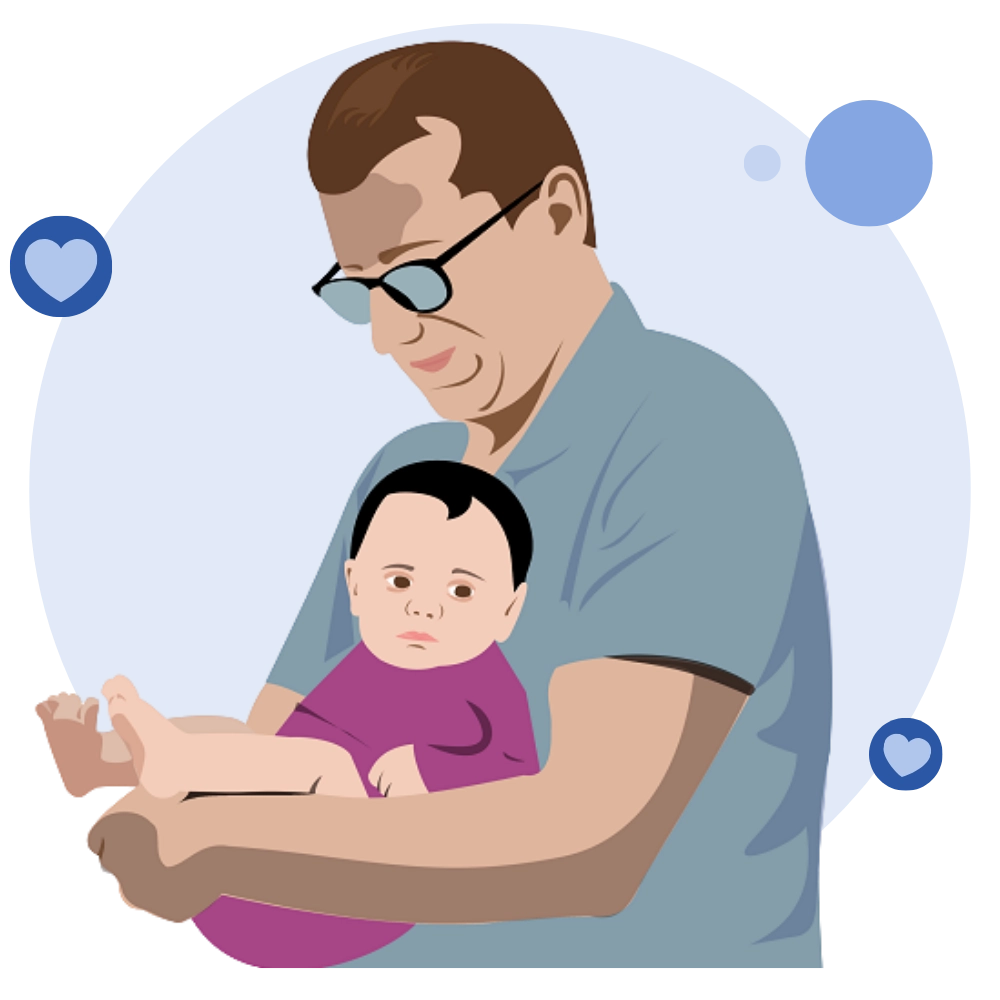
Module - Examination and evaluation of muscle tone and symmetry:
What is included in the module?
Lesson: Lower limb tone control test
You will discover the benefits of the High Bottom position presented in the course for the first quarter, allowing for the correct execution of this examination.
Lesson: Head's axial position symmetry control after the 1st quarter
You will learn how to properly assess the symmetry control of the axial alignment of the head in the supine position, that is, lying on the back. You will also see how I discuss the axis of head and trunk control. I also emphasize the correct motor positioning of the upper and lower limbs.
Lesson: Shoulder girdle test
This is one of the elements of assessing a child, based on which we can diagnose disturbances in muscle tension in the youngest toddlers. The examination is performed in the supine position.
Lesson: Head control test
You will also learn how to properly conduct the lateral head control test, which is dedicated to performing on toddlers after the completion of the third month of life.
Lesson: Inducation of the flexion movement pattern
You will learn how the correct prone position, i.e., on the stomach for a toddler, should look in terms of pelvic control and the pattern of extension-abduction in the hips. I will also draw your attention to the fact that according to normal psychomotor development, by the 5-6 week period, the pelvis should already exhibit a greater pattern of extension in the abduction of the lower limbs.
Module – Lifting and carrying babies:
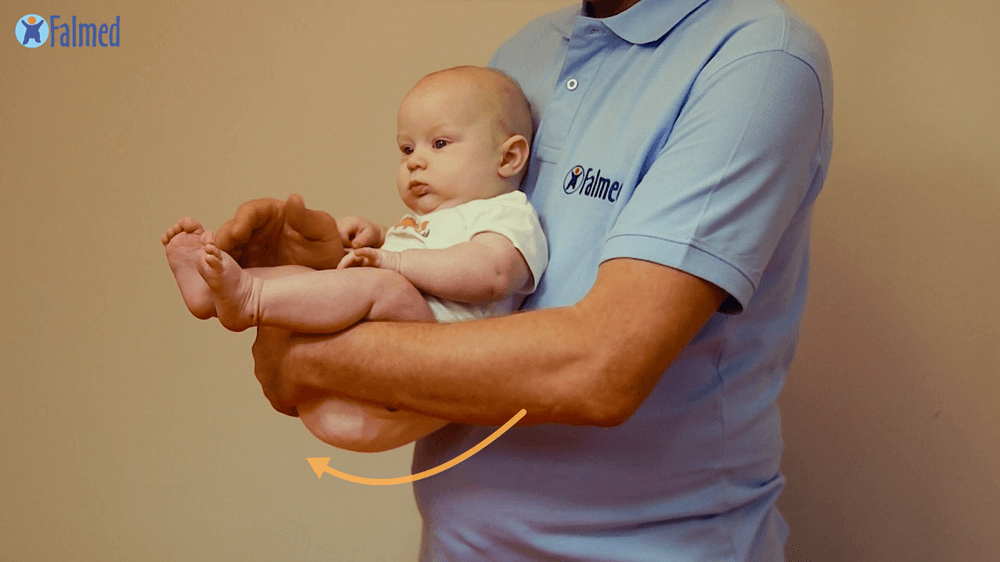
What is included in the module?
Lesson: Mistakes in lifting and carrying babies
The most common mistakes in these elements include, above all, grabbing the baby under the arms to be lifted and carrying it in a sitting position.
Lesson: Lifting in "the Pancake Hold" and changing position
As we discussed in the previous lesson, the ‘armpit lift’ is not the best technique. That is why we suggest that you pick up your baby with the "pancake lift", in a safe and physiological way, where the gravity forces do not affect its spine so much.
Lesson: Improving muscle tone hold
The Moro reflex is a physiological reflex in the 1st quarter and it is usually a response to a sudden change of position. This hold is safe and even if the baby tenses up sharply, we will prevent the child from slipping out of our hands by holding it under the neck and bottom.
Lesson: Proper baby carrying
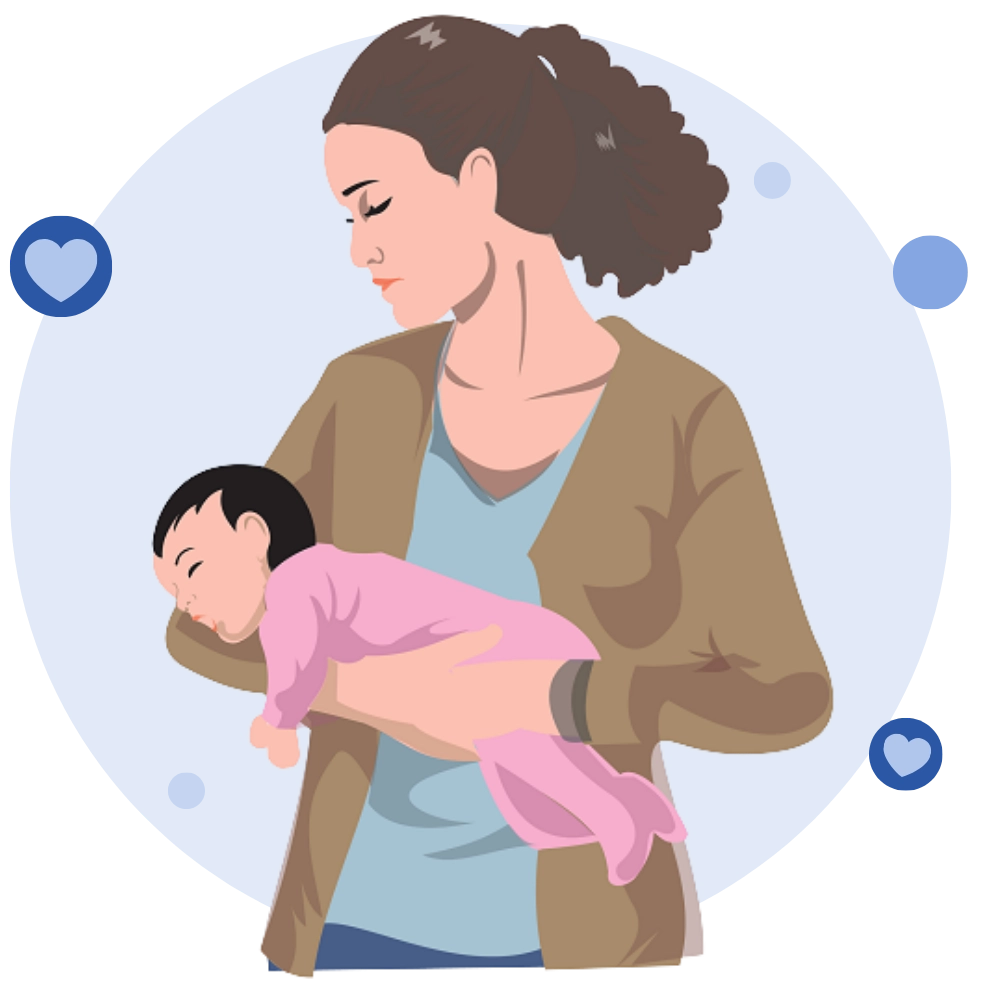
We propose carrying the baby in the ‘Royal Position’ – the VIP position, i.e. sitting down, but with a low-set bottom and hips pushed forward. Also, we give you the lateral ‘Tiger Position’, which has a calming effect on the baby, helps to satisfy the sucking reflex, and also aids in gastric problems.
Lesson: Carrying after feeding
Immediately after feeding, to burp the baby, we suggest to hold the baby in such a way that its head is over the edge of our shoulders, and its stomach is placed on our chest. After burping the baby, you can carry it in the "Tiger Position".
Module – Care and daily activities:
What is included in the module?
Lesson: Ways to soothe babies
Crying is a natural way for a baby to communicate with us. In this lesson, we will show you ways to calm your baby, which will work, provided that we have taken care of a full stomach and a dry diaper.
Lesson: Dressing a baby
Like taking off parts of clothes, dressing a baby is an activity you do every day. See the way of dressing a baby we recommend that is safe and the least irritating to the sensory system.
Lesson: Undressing a baby
An activity you do every day, often more than once. Therefore, it is worth learning to do it in a child-friendly way. We will show you how to take off your baby's tops and bottoms so that it is safe and does not irritate the skin excessively.
Lesson: Proper way to wipe baby’s mouth
Spitting up after feeding or drooling, which is a completely normal phenomenon in babies in the first weeks of life, requires parents to wipe their mouth and around the mouth. However, it is often done in a way that stimulates the child's very sensitive oral sphere. In this short lesson, you will see how to wipe baby’s mouth and not irritate it.
Module – Exercises and developmental norm
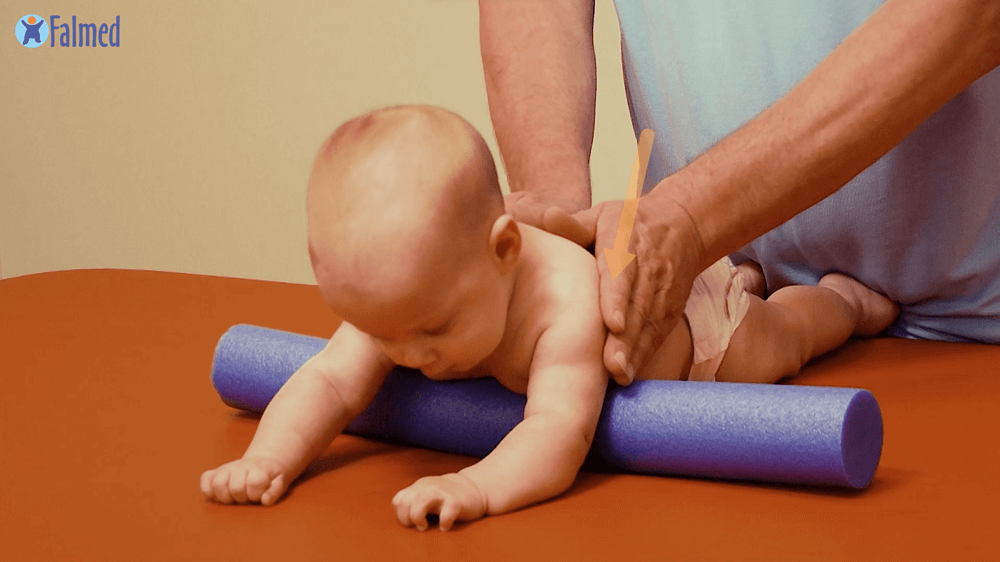
What is included in the module?
Lesson: Developmental norm and the High Bottom
From this lesson you will learn what we consider a developmental norm at the end of the 1st quarter that is what skills a harmoniously developing baby should have at 12 weeks of age. We will also show one of our prime exercises, which not only consolidates symmetry, but also allows the baby to explore its own body through the contact of hands with legs.
Lesson: Symmetry, arms positioning and support on a roller
We will draw your attention to the correct behavior of the baby in lying on its back, as well as to the proper position and activity of its arms. We will also show you how to encourage your baby to be more active on his stomach, using the front support with a foam roller.
Lesson: Stimulation by pressing
Stimulation of deep sensation that is proprioception, is a very important and pro-developmental element from the 1st weeks of the baby's life. These are toning and pleasant stimuli for the baby.
Module – Plays stimulating harmonious development:
What is included in the module?
Lesson: High Support - continued
In the second quarter, we want to and can count on the cooperation of the baby, who set into the High Support, will be able to keep the position on straightened arms. This exercise perfectly strengthens the muscles of the arms and back, and also trains the baby’s proper level of muscle tone in the shoulder girdle.
Lesson: High Bottom - continued
High Bottom is our play with which we achieve at least three goals. Firstly, we encourage the baby to contact its hands and legs and get to know its own body. Secondly, we consolidate symmetrical movement patterns. Thirdly, we practice flexion, abduction and external rotation of the hips, which strengthens the abdominal and back muscles.

Module – Ball exercises:
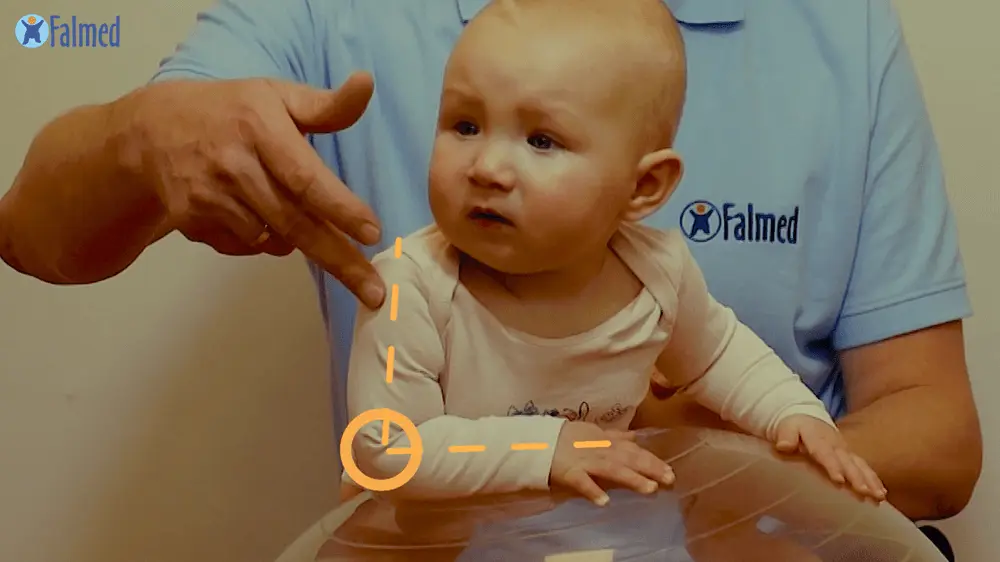
What is included in the module?
Lesson: Working on the ball ‘Health and Safety’
It is a short but very important lesson. Check what you need to do to safely exercise with the baby on the ball, and how to assume a comfortable position for your back, which is often overloaded with a number of everyday duties.
Lesson: Lying on the stomach – warm-up
Each of the activities on a ball must start with familiarizing the baby with the ball, as well as preparing the baby’s body for more intensive work. We start with a play, which we call Bouncing that is bouncing the baby on the ball.
Lesson: Lying on the stomach - high support
A good variation and, at the same time, an additional challenge to the play in high support is transferring it to the ball. We gain the same as we would do this exercise on the floor, but simultaneously we familiarize the baby with the ball and have a nice time together.
Lesson: Lying on the stomach - side to side balance
With the side-to-side balance, we strengthen the abdominal and back muscles, as well as baby’s control of the torso. All these factors are necessary, for a harmoniously developing baby, to initiate moving on all fours in the third quarter.
Lesson: Lying on the stomach - tactile stimulation and vibration
This exercise can be a great break between our other exercises. Strong meaning an intense tactile stimulus gives the baby a sense of security, and additionally it has a toning effect. Vibration is also an intense stimulus.
Lesson: Lying on the stomach - full workout
This lesson combines all the other lessons in this module into one. 10-15 minutes of these activities during the day suffice to support the harmonious development of the baby, strengthen its ability to control and balance the torso and thus help in achieving milestones.
Module – Turning in 2nd quarter:
What is included in the module?
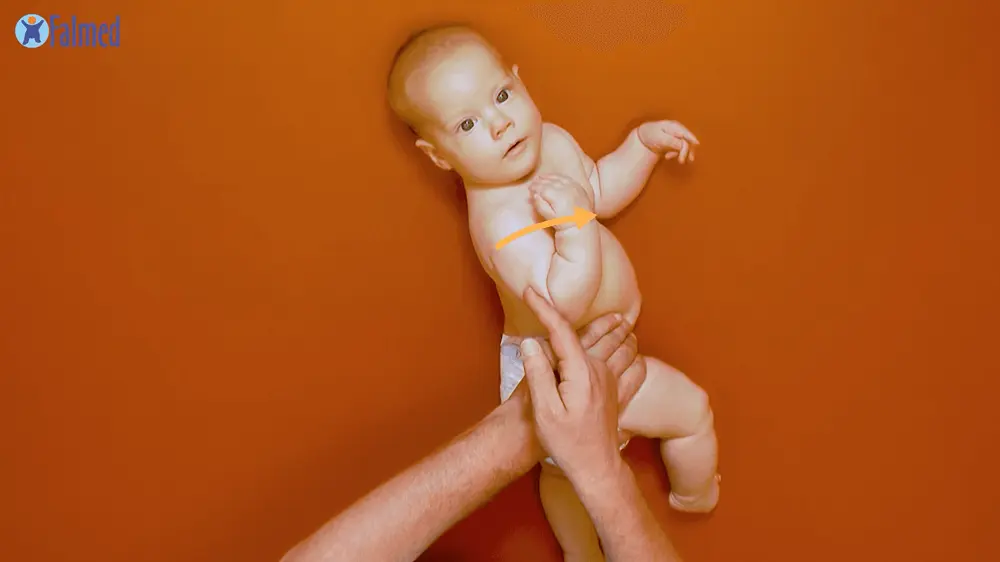
Lesson: Back-to-stomach turn
Turns are a great exercise supporting the desire to stay on the stomach. After the rotation, the baby can move into a high support and strengthen the shoulder girdle.
In this exercise, remember that the baby should do as much of it as possible on its own. Also, do not forget about symmetry, do an equal number of repetitions for the left and right side!
Module - Turns and three-point support 3rd quarter:
What is included in the module?
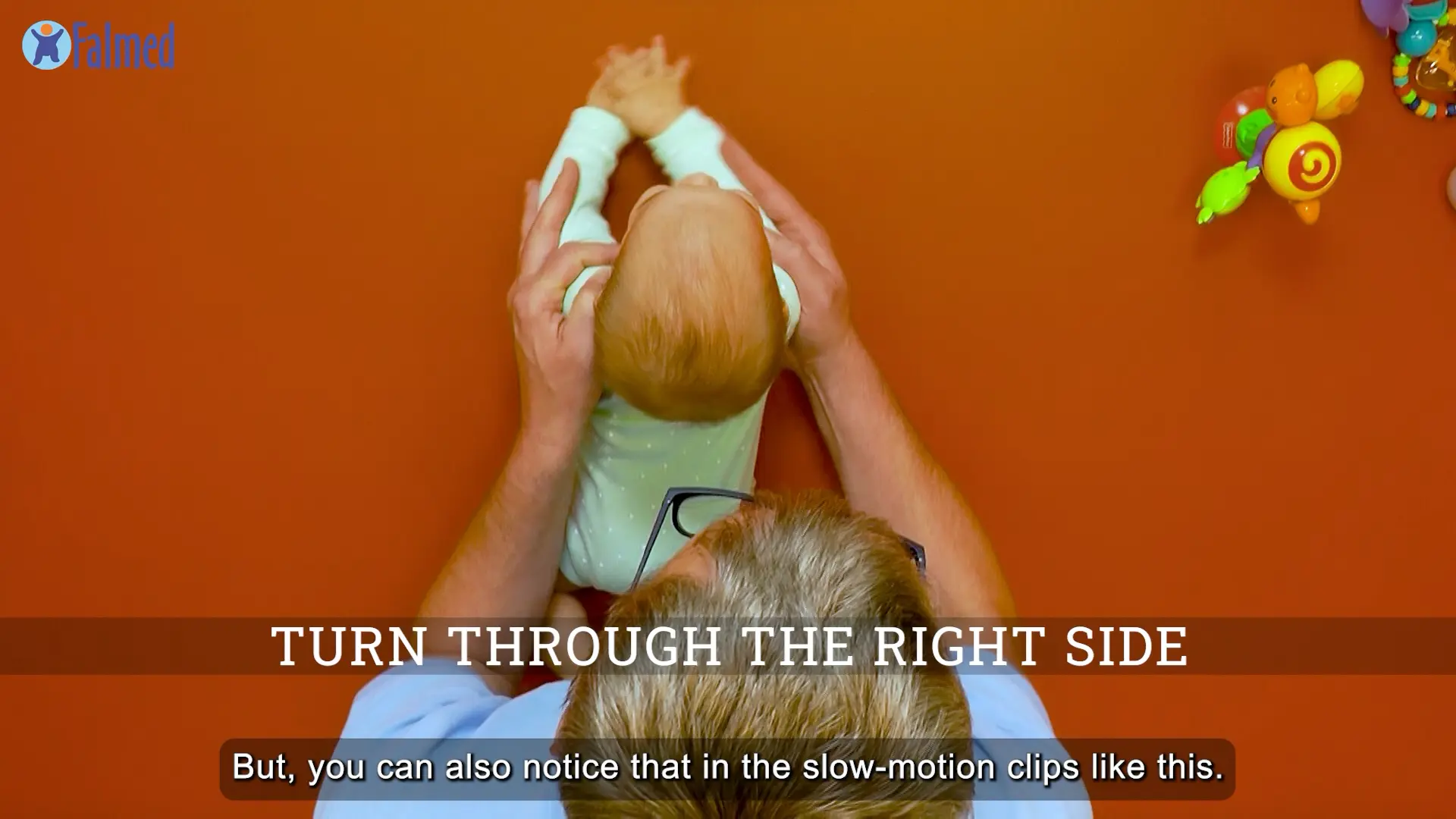
Lesson: Stomach-to-back turn
It is more difficult to perform than the one from back to stomach, which is why we can expect it from a baby between 6 and 7 months of age. In this lesson, we will show you the correct technique to practice the turn, which is designed to help your baby acquire this skill.
Lesson: The President's Elbow – three-point support position
This is one of our original positions in which a baby, lying on one side, can actively and freely use the other hand, e.g. reaching for a toy. In this position, we mobilize muscle groups that a baby uses to get into the on-all-fours position.
Module - Low verticalization:
What is included in the module?
Lesson: Three elements of stimulation to crawling
The on-all-fours position, called crawling by parents, can be a difficult or even unattainable position for a baby. Not every baby wants to crawl on all fours. Nevertheless, we like the on-all-fours position because it is a multi-level, correct stimulation of development.
Lesson: Crawling - practice
In this lesson, we will show you how to specifically practice the initiation of crawling with your baby. We will present the correct hold and positions or movements to use with your baby to help it develop harmoniously in the 3rd quarter and reach this milestone.
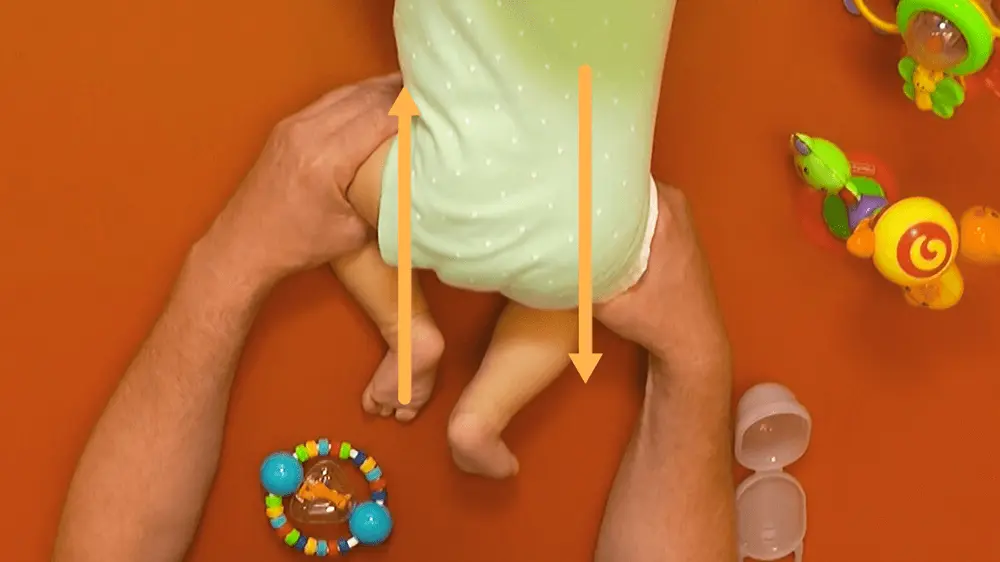
Lesson: Crawling - transition to a sideways sit
From this lesson you will learn how to go, with a baby who has already mastered the position of on-all-fours, to a sideways sit and assume an independent sitting position.
Lesson: Kneelings and sideways sit
Kneelings are the basic exercise in low verticalization and, at the same time, an excellent preparation for high verticalization of babies. Practicing kneeling and moving from this position to sitting sideways engages many muscle groups that are crucial for standing up and then walking in the 4th quarter.
Module - Sitting exercises on the ball:
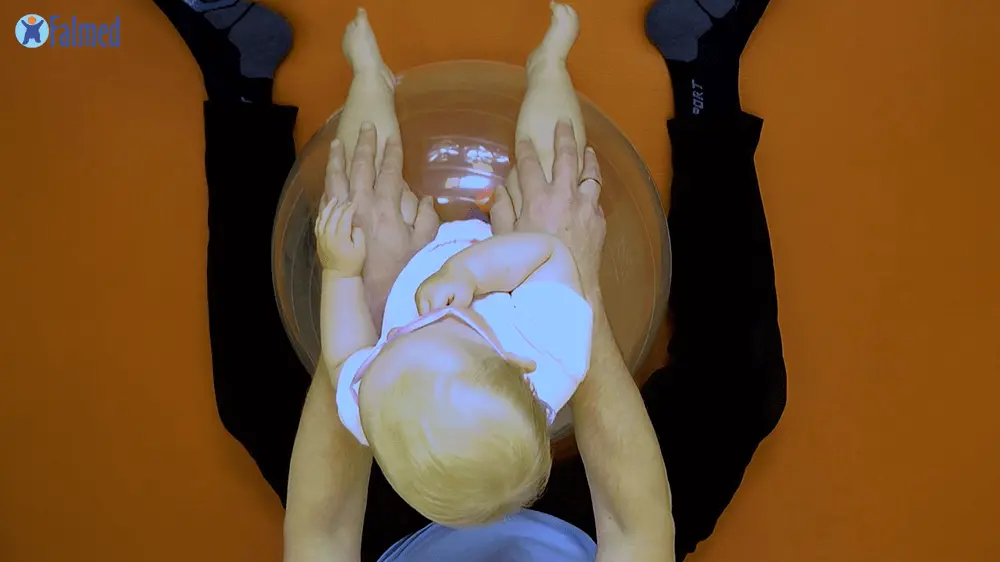
What is included in the module?
Lesson: Seating a baby safely on the ball
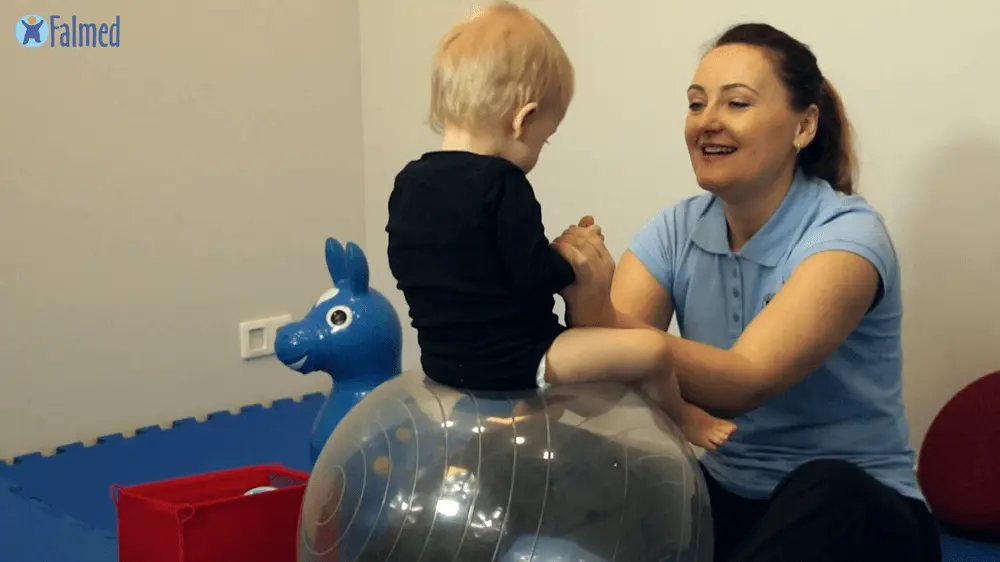
This lesson is the most important in this module, make sure to start with it! The sitting position on the ball is less stable than the lying position, which is why it is very important to seat a baby in a safe way. In this lesson, we will show you how to do that, and how to hold a baby securely while exercising together.
Lesson: Back-sitting exercises on the ball
Our play on the ball begins with a warm-up - bouncing, which you should already know from the 2nd quarter. We will also show you the elements of balance strengthening the muscles of the back and abdomen.
Lesson: Front-sitting exercises on the ball
Being face to face with a baby gives us the opportunity to encourage it to be active by making funny faces. Due to the eye contact, front-back and side-to-side balance tasks may require more focus and concentration from a baby, thus the level of difficulty increases.
Module - Preparation for verticalization:
What is included in the module?
Lesson: Preparation for verticalization in sitting on the ball
The ability to control and balance the torso comes from the correct modulation of the abdominal and back muscles. For stimulation of their development, a ball will be perfect. You will learn how to perform side-to-side and front-back balance!
Lesson: Preparation for verticalization in lying on the stomach position on the ball
In this play, we prepare a baby for independent verticalization, we work on the motor skills of baby’s legs. In this set of exercises, you will also learn about the positive aspects of side-to-side balance in lying on the stomach!
Lesson: Constraining winging
Torso control with the, so-called, wings is incorrect. In our play, we show you a simple and very effective way to constrain winging!
Lesson: Preparation on modulated ground with support
Modulated ground is a term from physiotherapeutic nomenclature. It can be, for example, a sensory pillow also called a hedgehog. It is our another perfect tool to support exercises and plays next to the ball.
Lesson: Learning to walk
From this video you will learn how proper learning to walk should look like, why a baby's shoulder girdle should be lowered and what position the parent should keep.
Lesson: Self-verticalization
The use of the ball that engages the baby’s shoulder girdle, thus making the task more challenging for a baby – it is an excellent training and stimulation!
Module - Sensory stimulation as an element of preparation for verticalization:
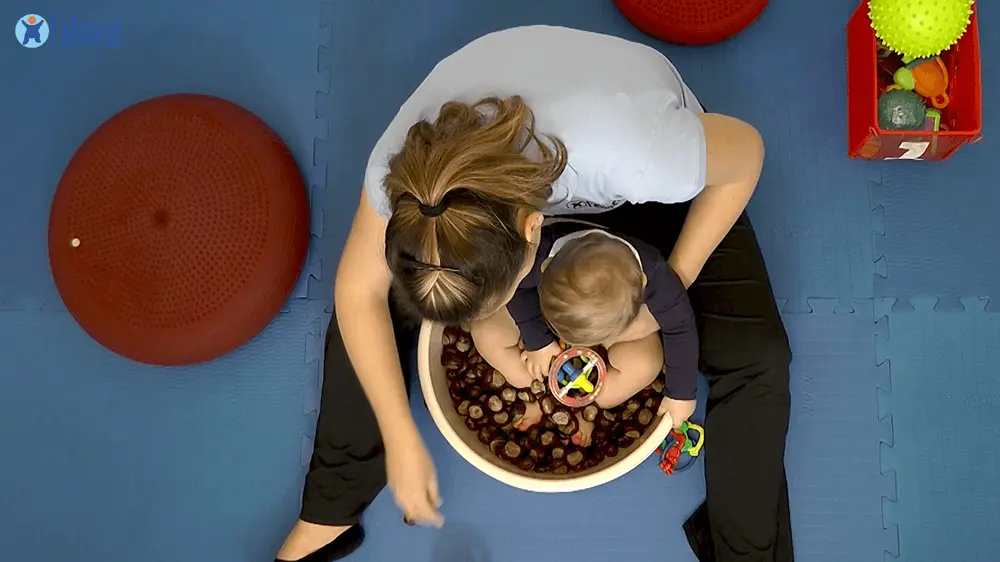
What is included in the module?
Lesson: Feet stimulation on the “hedgehog”
The hedgehog is perfect not only for exercises involving stability, or control and balance of the baby's torso. Its spiked texture and shape changes under the foot’s pressure will perfectly stimulate the baby's deep sensibility!
Lesson: Feet stimulation in chestnuts
The chestnuts’ irregular shape, hardness and temperature, as well as the sound when they are moved, are the elements that provide the baby with stimuli that support its development.
Lesson: Sensory stimulation with a massager
In this video, we go beyond the feet and we show you the beneficial effects of full-body compression stimulation. A stimulated baby will be relaxed and satisfied. Even an ordinary massager or roll-on can be useful.
Module - Balance and stability control:
What is included in the module?
Lesson: Knee and torso control, vestibular and proprioceptive stimulation
Great play for babies, for which you will need a rubber horse/jumper. This toy can help with knee and torso control, stimulate deep sensibility and the vestibular system. We show you how to constrain the curling of your toes.
Lesson: Forward and sideways balance on the jumper/horse
In this video we work on support on the arms. The balance on the rubber horse supports torso control in addition to the correct work of the arms.
Lesson: Control in the kneeling position
Kneeling is one of the intermediate position in standing up. While kneeling, we can practice bending and extending the torso. To encourage a baby, we can use a toy that it has to reach for.
Lesson: Torso control on parent's lap
Every day you spend some time with your baby on your lap. We will show you how to use this time to play that strengthens the control of the baby's torso. In the video, you will also see popular especially among grandmothers and grandfathers – hop-hops stimulating the vestibular system.
Lesson: Standing Balance
In this lesson, we will show you a play of transferring your body weight to the front leg and the back leg. This way we stimulate both the feet and knees, as well as the torso, abdomen and back, which are responsible for maintaining a stable position, to work intensively.
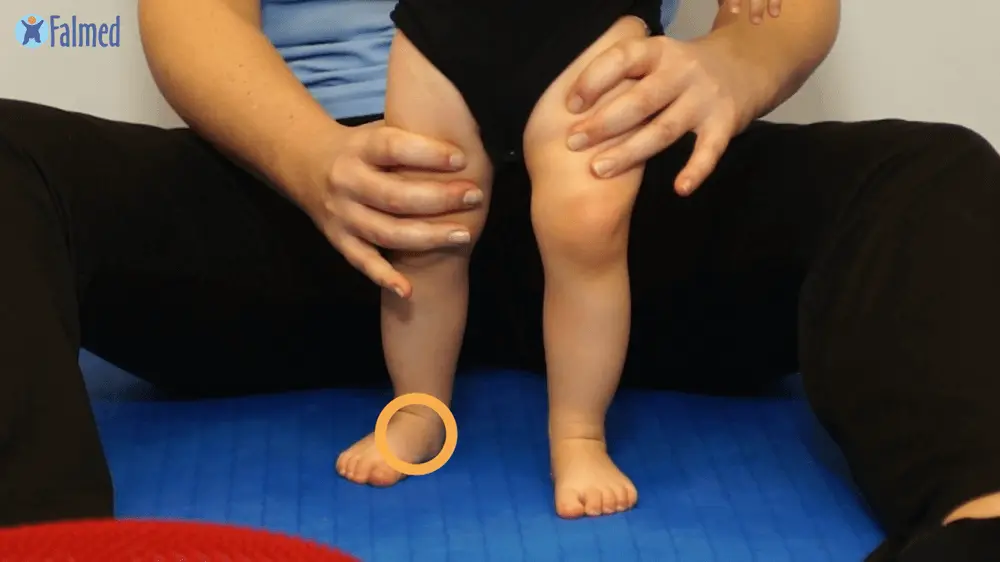
Module - First shoes:
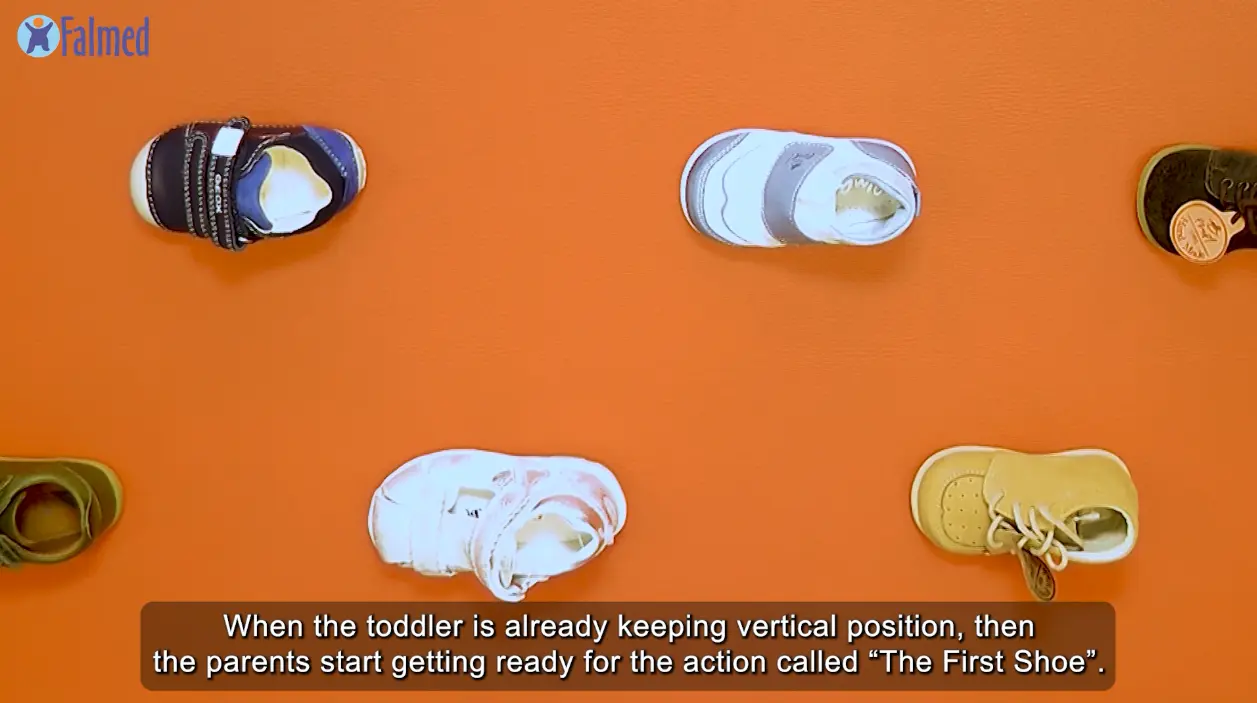
What is included in the module?
Lesson: Characteristics of good first shoes
Throughout the entire episode, you will learn what is important in a shoe from the point of view of harmonious development and what shoes are safe for a baby's foot. And also which type of a given shoe is better from a physiotherapeutic point of view.
Lesson: Ways of measuring a baby’s foot
From this video you will learn what are the proven and effective methods to measure a baby's foot. A foot at this age is growing dynamically, often the measurement from a few days ago is no longer valid!
Over 4000 parents have already trusted my methods!
In my 25 years of work as an instructor, I have conducted several hundred trainings for over 4000 physiotherapists!
Aleksandra Bachanek
A very interesting training providing a lot of information with practical tips. I recommend it to anyone working with similar patients.
Martyna Bielka
The information is conveyed in a simple and understandable way. Every smallest doubt is dispelled. A vast amount of knowledge presented in a professional manner. I recommend it!
Aleksandra Michniewicz
A large amount of information presented succinctly, clearly, and interestingly.
Anna Parysek
A lot of practical knowledge conveyed in a very accessible way.
Agnieszka Wróblewska
Extensive knowledge from the presenters delivered in a clear and satisfying manner. Interesting proposals for toddler therapy.

Video — How to carry and what exercises to do with the child

Safe play and exercises for your little one

Immediate access to the course

Answers to your questions in the group
Video — How to carry and what exercises to do with the child?
Safe play and exercises for your little one!
Immediate access to the course!
Answers to your questions in the group!
We include three highly valuable bonuses!
#BONUS 1
LIFETIME ACCESS TO THE CLOSED FACEBOOK GROUP
Value: £59 as that's the cost of an individual consultation with me
You'll join a group where we address all your questions related to infant development.
We explain what developmental norms are, whether your child's behavior aligns with them, whether a certain toy is safe and suitable for your baby's age.
Parents within the group share experiences and give each other advice.
Additionally, we host regular Q&A sessions inside the group where I answer all your questions.
#BONUS 2
KNOWLEDGE BASE – HELP US EXPAND IT!
Value: £29
These are questions most parents of infants ask themselves.
In the Knowledge Base module, you'll find answers to a dozen of the most frequently asked questions by parents.
We'll keep adding more answers, including to your questions.
#BONUS 3
AUDIOBOOKS
about normal and abnormal infant behavior from 0 to 3 months!
Value: £19
Probably you are wondering how much it costs?
Pediatrics is a challenging but highly rewarding field in physiotherapy.
It requires knowledge in making accurate diagnoses, recognizing developmental concerns in infants, and conducting effective, safe interventions for the little ones.
I acquired this knowledge, practice, and experience through over 30 years of work.
Physiotherapists who attend my in-person course pay well over £500.
You don't have to pay that much.
The complete course is available for...
£139
At this price, you'll receive:
£139 is what you will earn for three infant consultations!
With the knowledge from the course, you will know how to conduct them.
Investing in my course will pay off within a day when you see three patients.
The knowledge and skills from the course will provide you with the foundation to create efficient and effective infant therapy plans.
And this will translate into positive reviews, a greater number of clients, and the growth of your practice.
What will happen if I don't buy the course?
Your diagnoses, your assessments of infants will not be as precise as they will be when using my methods!
Your therapy will not be as effective as it will become through my program!
You won't receive as many positive reviews from parents as you will by implementing my program, which will slow down the development of your business!
What you will primarily lose if you don't join the Falmed Academy is the most valuable asset you have – your time.
Time for implementing other courses burdened with an excess of theoretical knowledge that you already know from your studies!
Time that you will lose verifying conflicting information.
I invite you to join Falmed Academy where the saved time can be devoted to your family!
WITH FALMED ACADEMY YOU WILL LEARN:
TO SUMMARIZE
The total value of the course is £446
You buiyng it for
£139
£120
AUTUMN SALE -20% OFF!
You missed out!
Frequently Asked Questions
Absolutely! Our Instagram content represents only about 10-15% of what we present in the course! Instagram videos are usually only 80-90 seconds long, and because of their dynamics it is difficult to show everything in detail.
Are the Instagram videos cataloged in one place, or do you have to search for them? They are not cataloged.
Can you pause a video (by tapping the screen) or skip to a specific part of a video? No, you cannot. You have to watch the entire video from the beginning.
The course contains several hours of video lessons that comprehensively cover the development of infants in the first quarter!
Prominent physiotherapists with significant Instagram profiles have also purchased our courses – a testament to our quality!
Absolutely! Over 3000 parents have already benefited from Falmed Academy, and we haven't received a single complaint about any lesson being too difficult.
Before the Academy was established, this program was successfully completed by over 900 parents as part of the Baby Club - my group classes for babies and parents!
With my 25 years of experience as an instructor of physiotherapist courses and academic lecturer, I know how to convey knowledge in a way that is understandable for everyone.
Every aspect in the course is presented very precisely, in detail, and step by step!
Our Facebook group functions exceptionally well, and many parents appreciate the additional support it provides!
I approach each issue and question raised by parents there in a practical and individual manner.
We also regularly organize Q&A sessions – excerpts from which you can find in the Knowledge Base Module!
You have access to the course for 10 years! You'll have plenty of time to go through all the content and even repeat the program with your second and next children!
I'm not accustomed to giving fluff in my training. I focus on practicality because it's the most important aspect. I teach you specific techniques, skills, games, and exercises.
I know very well that showing and repeating each movement multiple times will give you confidence and peace of mind. Talking about it won't achieve the same results.
As a lecturer at the AWF (University of Physical Education), I taught subjects specific to physiotherapy, like neurology and pediatrics. I taught my students a practical approach to patient care. I'm not the kind of academic who publishes articles to prove the obvious.
Opinions from parents, my students, and participants in my courses for physiotherapists are unequivocal – Faliszewski focuses on practice!
Absolutely! You can see this in our ads and in the lesson clips above. It's not deep fake technology. I don't work with dolls.
Every stimulation I demonstrate is done on a real baby to show you how an infant reacts to what I'm doing.
I'm convinced you will! The stimulation I show you requires repetition and routine. Thanks to clear instructions and the possibility to replay lessons, you'll master every element of the course.
Efficiently spending time with your baby to support its harmonious development doesn't require many hours each day. Just a few minutes of shared play in multiple sessions throughout the day will suffice!
Playing in high support, lifting techniques, and proper carrying, combined with touch stimulation, will become a habit for you after just a few days!